SMART THINKING NEWSLETTER – EDITION 3
Shaping the Future of Sport Facilities Through Insight-Led Design
Sport facility design is undergoing a fundamental shift. Where traditional approaches once prioritised single-sport performance or short-term cost, today’s leading organisations are moving toward integrated planning that considers community outcomes, environment, lifecycle value, innovation and long-term sustainability.
This edition of Smart Thinking explores the insights and emerging patterns influencing how Australia (and the global community) will design and deliver sport surfaces over the next decade. Taken together, they form a compelling picture of where the sector is heading, and where smart decision-makers are already adjusting their approach.
1. Sustainability Is Now a Primary Performance Requirement
For many years, sustainability sat beside performance as an “additional consideration.” Today, the two are inseparable.
The 4th Edition Smart Guide and the IAKS Future Trends for Outdoor Sports Surfaces whitepaper both highlight the same long-term truth:
surfaces designed for sustainability also deliver more consistent, predictable performance over their lifespan.
This shift is driven by:
- community expectations for environmental responsibility
- concerns around heat, water use, and microplastics
- operational cost pressures
- increasing climate variability
- supply chain transparency
- policy alignment with SDGs and circularity principles
Examples of sustainability driving performance outcomes include:
- Organic infills that reduce heat and enhance comfort
- Recycled shockpads with long-term elasticity consistency
- Bio-based polymers that lower environmental load
- Waterless hockey systems that reduce operational costs
- Hybrid grass technology that increases wear tolerance
These innovations show that sustainability is no longer “nice to have” — it is foundational to long-term surface quality.

2. Multi-Use and Multi-sport Design Is Becoming Essential
As participation patterns continue to diversify, councils are prioritising surfaces that support multi-sport and multiple activities – maximising return on investment and increasing opportunities for community use.
Multi-use development aligned with the Smart Guide includes:
- fields lined and constructed for multi-code formats
- hybrid systems catering to extended seasons
- shockpads engineered for multiple sports
- acrylic surfaces designed for both structured and informal play
- outdoor recreation spaces supporting fitness, walking football, social sport, and casual use
This shift is being driven by:
- land scarcity
- increased community demand for informal activity
- the rise of modified sport formats (Hockey5s, 3×3 basketball, Rugby 7s)
- strategic push towards universal access and inclusion
A smart facility today is one that serves a broad community – not a single team.
3. Whole-of-Life Thinking Is Reducing Long-Term Risk
Short-term thinking has historically been one of the biggest contributors to surface performance issues, community dissatisfaction and escalating maintenance costs.
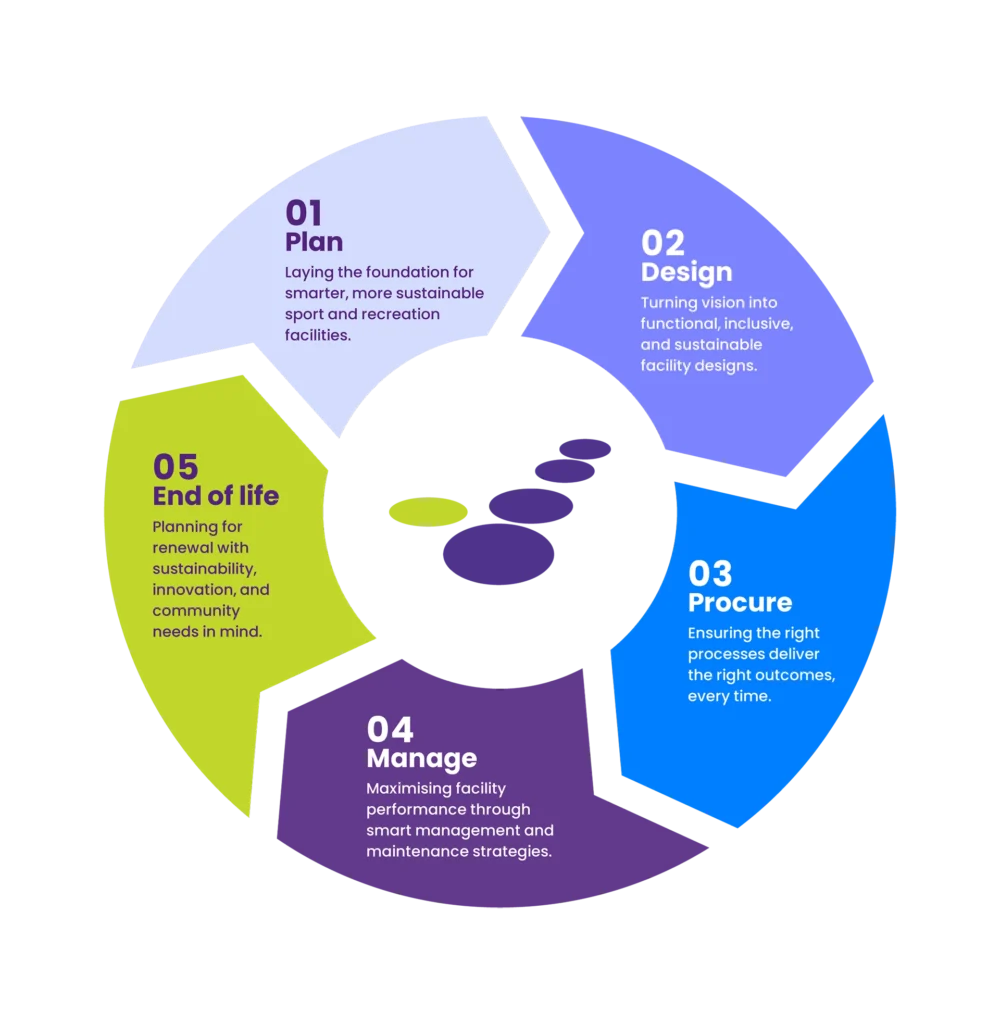
SCC’s 5-Phase Lifecycle Model continues to be a critical framework for councils seeking to reduce this risk.
When planning, design, procurement, management, and end-of-life are linked together from the start, organisations can:
- avoid over-specification or under-specification
- select systems with proven long-term durability
- reduce replacement and renewal costs
- embed sustainability and circularity from day one
- ensure shockpad and base layers are future-proof
- manage community expectations more effectively
The strongest outcomes occur when lifecycle value drives early design decisions, not the other way around.
4. Participation Trends Are Reshaping Design Decisions
The way Australians engage in recreation and community sport has shifted dramatically.
Insights from sport participation research and global surface usage trends show:
- young people are participating in less structured sport
- women’s sport continues to grow
- older adults are increasingly active
- informal and unstructured recreation is surging
- social and adaptive formats are rising across multiple sports
- year-round usage expectations are increasing
- demand for multi-purpose, accessible spaces is accelerating
Surface design must therefore adapt to:
- varying intensity levels
- broader user demographics
- safer surfaces for beginners and casual users
- flexible activation opportunities
- all-age and all-ability engagement
This evolution reinforces the importance of designing sports surfaces and the broader facilities that are versatile, resilient, inclusive and intuitive.
5. Climate Responsiveness Is Now Non-Negotiable
Climate considerations are rapidly becoming central to sports surface and facility planning.
Key design influences include:
- heat reduction
- shading and tree canopy integration
- water-sensitive design
- stormwater capture
- permeability and drainage strategy
- material temperature behaviour
- durability under extreme conditions
- whole of parkland design and not just the field of play
Designers and councils are increasingly looking to:
- choose low-heat materials
- support microclimate improvements
- reduce irrigation needs
- design for expected climate patterns over decades
This aligns strongly with the IAKS Future Trends prediction that climate-responsive design will become a defining feature of 21st-century sport facilities.
The Vision Behind Smart Thinking
With the launch of the 4th Edition Smart Guide, this newsletter becomes a natural extension.
Where the Smart Guide provides depth, Smart Thinking will provide interpretation, helping leaders learn and navigate:
- What the latest trends mean
- Which technologies are emerging
- Where councils are achieving success
- Where challenges are occurring
- How lifecycle planning reduces long-term failure
- What global insights are worth adopting locally
Each edition will explore one dimension of smart surface planning, drawing on real-world practice, global insights, and emerging technologies shaping the future of sport.
Practical Guidance for Councils & Decision-Makers
Based on these insights, councils can take the following steps today:1.Update planning frameworks
Embed sustainability, multi-use functionality, and lifecycle criteria early.
2.Reassess existing assets
Identify long-term risks, ageing shockpads, or opportunities to improve performance and sustainability.
3.Align procurement with new expectations
Ensure tenders reflect whole-of-life requirements and environmental standards.
4.Apply lifecycle thinking consistently
Integrate SCC’s 5-phase framework into every surface project.
5.Use the Smart Guide as a reference point
Benchmark decisions against a clear, evidence-led industry standard.
These steps minimise risk and strengthen the long-term value of sport surface and facility investments.