SMART THINKING NEWSLETTER – EDITION 4
Why Infill Can No Longer Be an Afterthought
For many years, infill was too often treated as a secondary detail in long-pile football turf design. The conversation usually centred on the carpet, shockpad, certification, or headline cost, while infill sat further down the specification, if at all, with many purchases leaving it to the suppliers and not appreciating the importance it plays.
The opportunity to recalibrate this approach cannot be more important than it is now, with the environmental narrative of using intentionally added microplastics and their impact on the environment.
The release of EN 15330-5:2025, the updated European standard for infill materials used in synthetic turf sports surfaces, marks a meaningful step forward in how infill is assessed and specified. The standard introduces a clearer framework around minimum performance and durability requirements, how infill is measured and classified, what physical and chemical properties should be declared, how batch consistency is controlled, and how reclaimed infill can be assessed for suitability for reuse.
That matters because infill is not simply a filler between fibres. It influences how a field performs, how it ages, how it drains, how it feels underfoot, how it responds to Australian weather challenges, how much maintenance it requires, and what becomes possible at renewal.
In other words, infill is not a minor specification detail. It is part of the system logic of the field.

A More Mature Way of Thinking About Infill
One of the most useful things about this updated standard is the signal it sends to the market.
It reflects a broader shift away from narrow, product-led thinking and toward a more complete view of what surface components need to deliver over time. Infill is no longer being considered only through a play-performance lens. It is increasingly being evaluated through a wider set of criteria, including durability, consistency, environmental expectations, health considerations, and future reuse pathways.
That aligns strongly with what we have been saying for some time at Smart Connection Consultancy.
With the global transition from recycled tyres (SBR/crumbed rubber) driven by Europe’s directive to stop using rubber infill in all new fields from 2031, Smart Connection Consulting has been at the forefront of this choice in Australia, with all of the key manufacturers in Australia now offering organic infills including various cork options, corn husk, wood fibre, olive pips, with more expected to follow.
Each manufacturer will leave their infill options for the grass systems so a purchaser can’t simply ask for something new because it sounds good. The infill has to be tested with each system and this normally takes months to achieve. It’s best to understand the options and choices that are available on the market.
There is currently global research being conducted in the UK on players perception and various organic infills, between Sport England, the football foundation and Sheffield Hallam University and those results should be available late 2026.
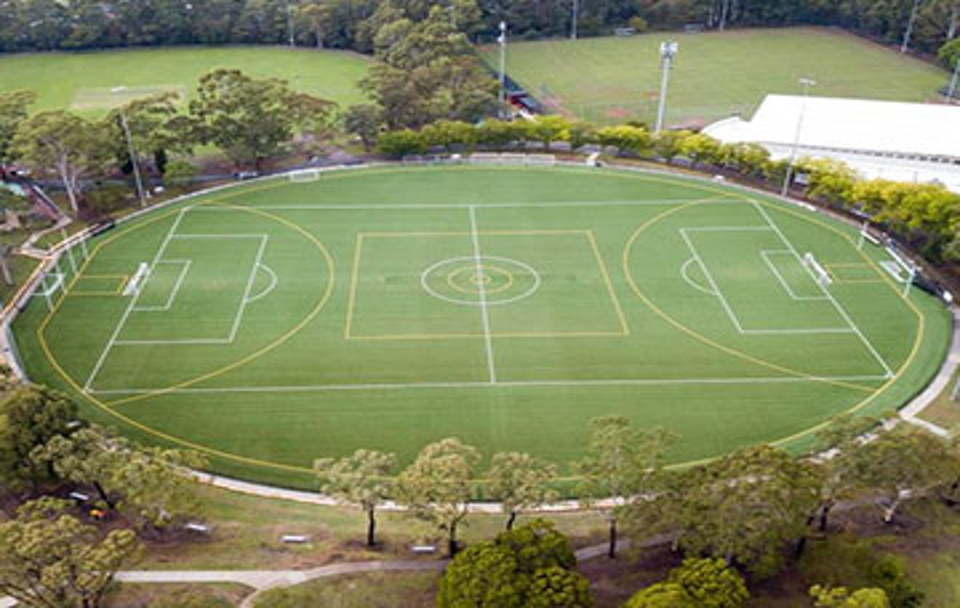
ELS Hall Multisport Field – The first field in Australia to use cork infill.
What This Means in the Australian Context
For Australian projects, this matters even more.
International standards are useful reference points, but they do not automatically resolve Australian conditions. Our UV exposure, heat, intensity of use, rainfall variability, maintenance realities, and community expectations all shape what fit for purpose should mean in practice. Smart Connection Consultancy’s design guidance already pushes beyond minimum international sport requirements and calls for stronger scrutiny around durability, heat, drainage, environmental alignment, and whole-of-life suitability.
So, while EN 15330-5:2025 is a European standard, the real lesson for Australia is not to copy and paste. It is to think more clearly.
It reminds us that infill performance needs to be understood and specified with intent, tested against real project conditions, and understood as part of a full system rather than a stand-alone material choice.
For planners and procurement teams, this represents a more holistic framework – one that brings environmental, health, and performance considerations into a single decision-making process.
That is why infill can no longer sit at the margins of the specification. It needs to be treated as a core system decision.
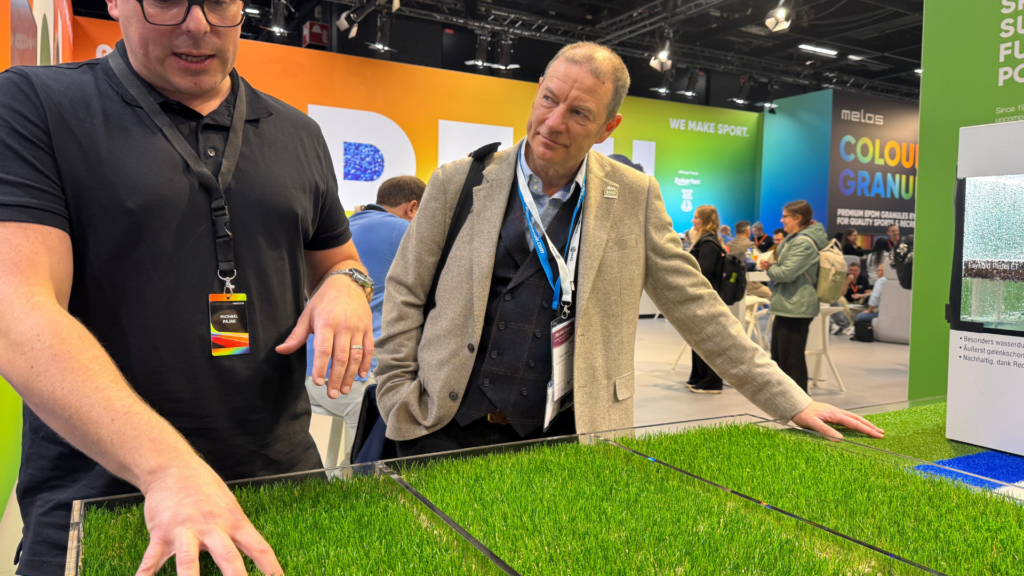
Assessing infill options and industry updates at FSB Trade Show 2025.
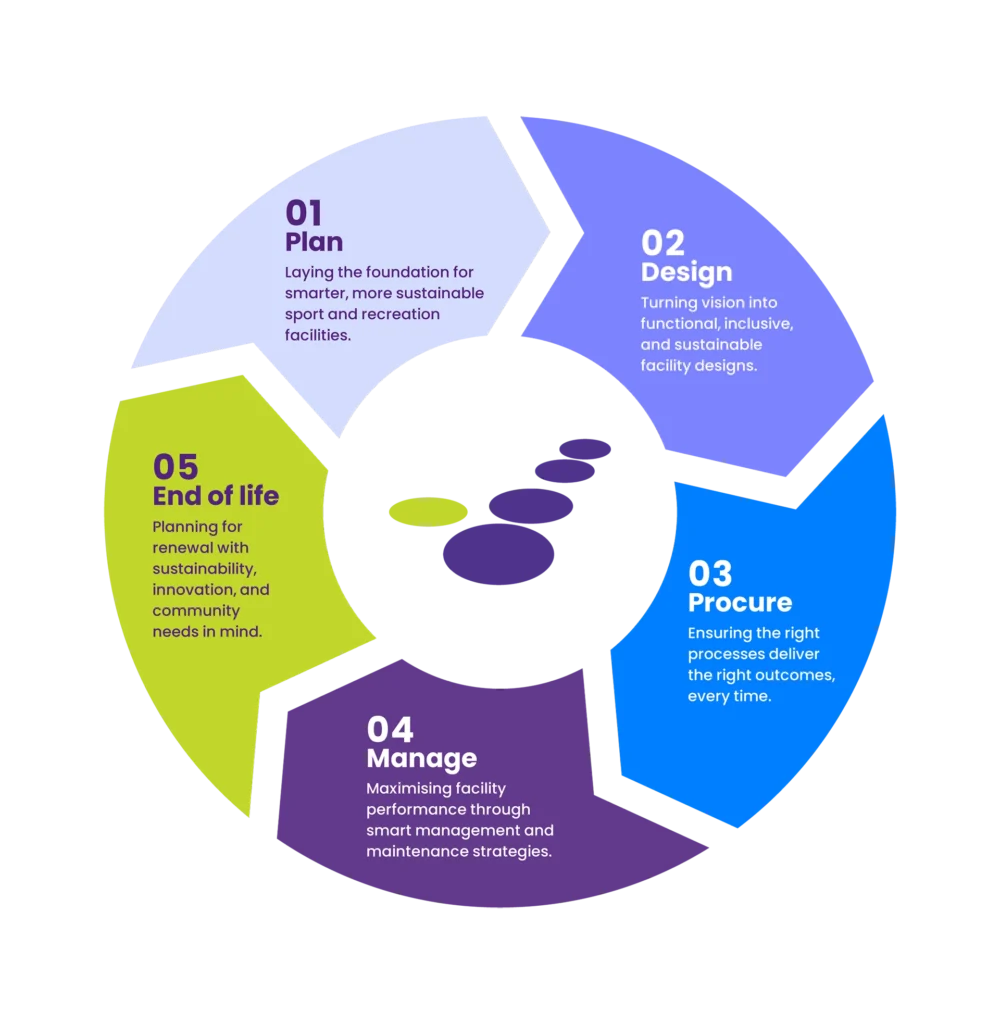
How Smart Connection Consultancy’s 5-Phase Lifecycle Changes the Conversation
This is where Smart Connection Consultancy’s 5-Phase Lifecycle approach becomes especially valuable.
Planning
The right infill decision starts well before design documentation.
At planning stage, the questions should include: what level of use is actually expected, who will use the field, what environmental sensitivities exist, what concerns are likely to arise through consultation, and whether long-pile synthetic turf is genuinely the right response in the first place. Smart Connection Consultancy’ planning framework has always emphasised needs assessment, options analysis, site suitability, stakeholder alignment, and risk mitigation before assumptions are locked into the scope.
Design
At design stage, infill should be considered as part of the whole surface system.
That includes how it interacts with the yarn profile, shockpad, drainage strategy, weather performance, maintenance needs, infill top up expectations, reduction in ball splash, infill migration and containment measures. The best design decisions do not treat infill in isolation.
This is why Smart Connection Consultancy stipulates that a dual yarn grass system is paramount, which features a monofilament and fibrillated tape combination, with the tape encapsulating the infill, thereby reducing ball splash and infill migration. Secondly, we ensure that a quality shockpad is part of the performance field system which over the past decade has seen the infill reduce from 25kg/m2 to 4 – 6kg/m2. This is a great outcome for both the environment and the players.
Procurement
Procurement is where good intent either becomes clear or starts to unravel.
If the specification is vague, product-led, or insufficiently explicit, infill can quickly become an area of inconsistency or misunderstanding. Smarter procurement means requiring declared properties, clear performance expectations, tolerances, evidence of suitability, and a level of transparency that allows tenders to be compared properly. Embracing the new EN standard is critical at this point.
As expectations evolve, so too must procurement and design practices. Decision-makers should prioritise fit-for-purpose performance matched to the sport and usage intensity, verified safety and environmental credentials, lifecycle thinking across maintenance and replacement, and future-proofing that keeps pace with changing standards and regulatory expectations.
Management
Once the field is in use, infill continues to shape outcomes.
It affects redistribution, brushing needs, decompaction requirements, surface feel, drainage performance, and the field’s ability to perform consistently under repeated use. If the selected infill does not align with the owner’s maintenance capability, problems will usually show up in operation rather than on paper. This directly influences the level and type of maintenance required, which is why a dual yarn system can be beneficial, helping reduce infill migration and, in turn, lowering maintenance demands.
End of Life
Perhaps the biggest mindset shift is this: end-of-life should not start at year eight or ten.
It should be considered at the beginning.
One of the most useful inclusions in EN 15330-5:2025 is that it describes how reclaimed rubber infill can be tested to assess suitability for reuse. That does not mean every project will pursue reuse, but it does mean the industry is moving toward more structured thinking about renewal pathways and material value beyond first use. If organic infill is used, when does it breakdown, and how is it reused after 8 to 10 years is critical to understand.
That is exactly the kind of shift lifecycle thinking is designed to support.
What This Does Not Mean for Existing Fields
It is also important to stay balanced.
A stronger framework for future infill specification does not automatically mean that every existing field should now be viewed as unsafe or unsuitable. That distinction matters, particularly given the level of concern councils, schools, and sporting organisations have had over recent years around rubber infill.
California’s Office of Environmental Health Hazard Assessment (OEHHA) released its final synthetic turf study in March 2026, finding no significant health risks to players, coaches, referees or spectators from exposure to chemicals detected in crumb rubber infill on synthetic turf fields. The assessment (initiated in 2015) drew on field and crumb-rubber sampling from 35 synthetic turf fields across California, including sites of different ages and from different climate regions, and considered exposure pathways such as skin contact, inhalation and incidental ingestion.
That should provide owners and users of current-generation synthetic fields with greater peace of mind, so they can remain focused on the enjoyment and benefits of playing sport.
Smart Connection Consultancy has been promoting and advocating all of the new EN Standards for more than a decade, but not all fields are designed the same. Before you have your next SBR infill, check that the infill being used has been test tested to EN 15330-5:2025. If you’re unsure, you can contact us for assistance.
The more useful lesson for the industry is not to create unnecessary alarm around existing assets. It is to improve the quality of future decisions.
That means being more explicit in how infill is assessed, more disciplined in how it is specified, and more rigorous in how health, environmental and performance considerations are brought together from the beginning.
Five Questions Worth Asking Before Finalising Infill Specification
Before finalising an infill approach for a new or replacement field, it is worth asking:
- What level and pattern of use is this field genuinely expected to carry?
- How will the infill perform in this site’s drainage, weather expectations (rain and heat) and climate conditions?
- What is the maintenance regime needed for the type of infill you are interested in procuring?
- How are environmental expectations, and community concerns being addressed?
- What is the likely renewal or reuse pathway at end-of-life?
These are not minor technical questions.
They are project quality questions.
And the earlier they are asked, the easier it becomes to avoid avoidable risk later.
A Final Reflection
The release of EN 15330-5:2025 is useful not just because it adds another standard to the shelf, but because it reflects a more mature way of thinking about synthetic turf systems and mirrors the approach that Smart Connection Consultancy has been embracing and leading for the last decade.
It reinforces a principle that applies far beyond infill alone:
Better outcomes come when critical components are considered early, specified clearly, and understood across the full lifecycle.
If infill has been treated as an afterthought in the past, this is a good moment for the industry to correct that.
For councils, schools, sporting organisations, and project teams, the message is simple: infill should be fit for purpose, safe, environmentally responsible, and specified with the same care as any other critical part of the field system. That shift may prove to be one of the most practical ways to improve long-term performance, reduce risk, and build greater confidence in synthetic turf decision-making.
If you’d like to stress-test your current specification approach, Smart Connection Consultancy’s self-assessment framework is a practical place to start. Just reach out to me directly to find out more.