SMART THINKING NEWSLETTER – EDITION 6
Sustainable sports surfaces are entering a new phase of decision-making.
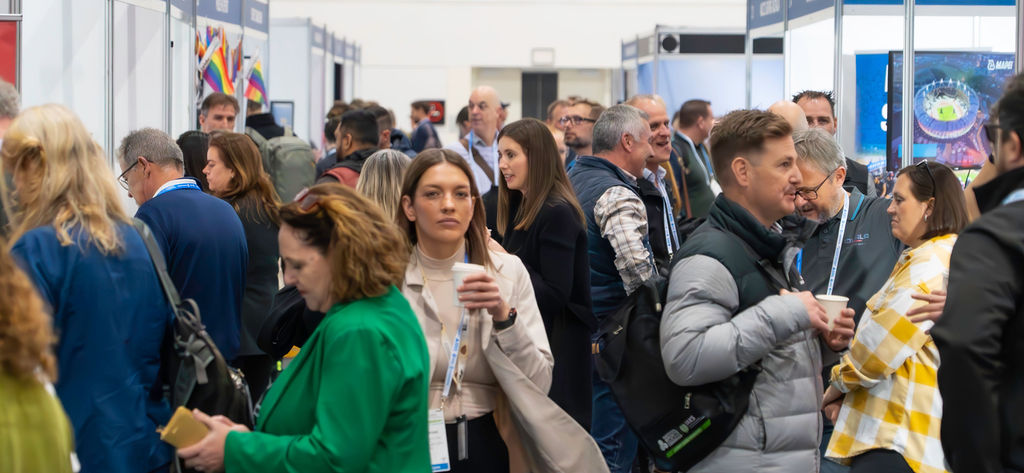
With NSC26 now only two weeks away, the timing feels right to bring this conversation into sharper focus. Across councils, sports, schools, designers and facility owners, the sector is moving beyond isolated discussions about product, performance or environmental concerns.
The decisions being made today are more connected, more scrutinised and more consequential.
A surface is no longer simply a surface. It is part of a broader place, a long-term asset, a community participation platform and an environmental responsibility. That means sustainability needs to be considered across the full lifecycle — from planning and design through to procurement, management and end-of-life.
This edition of Smart Thinking brings together the latest Smart Connection Consulting resources, thought leadership and industry activity designed to help the sector make more informed, evidence-based decisions.
As the industry prepares to come together at the National Sports & Physical Activity Convention, this is not just about responding to change. It is about helping shape The Next Generation of thinking for sustainable sports surfaces.
Bringing Lifecycle and Sustainability Thinking to NSC26
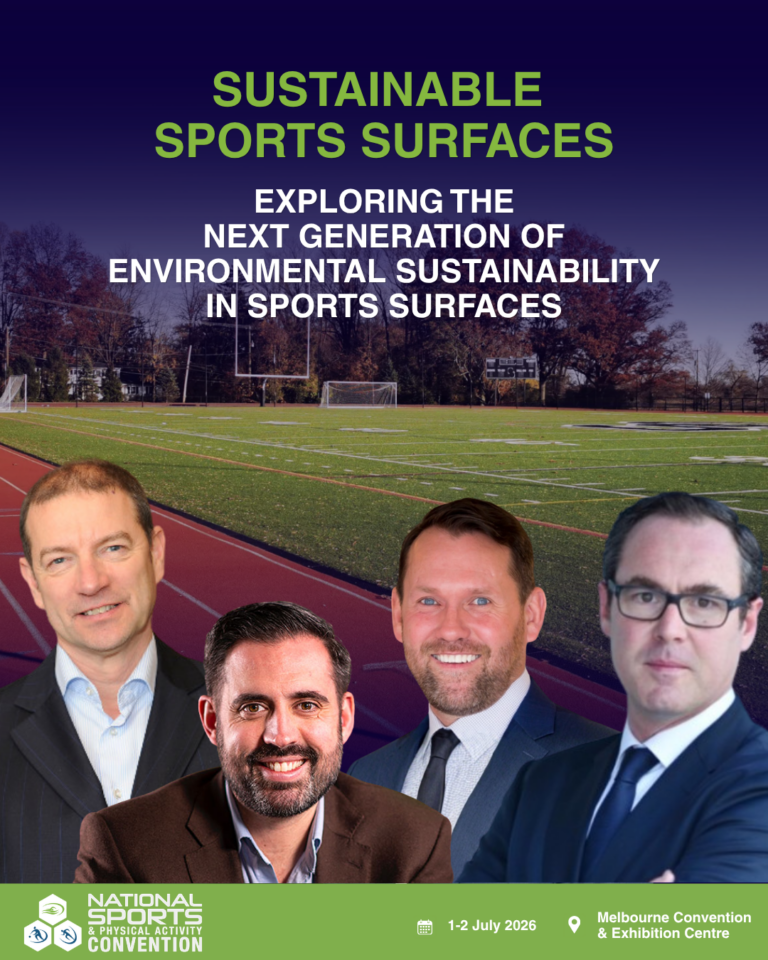
NSC26 provides a timely platform to explore how the next generation of sports surface decisions are being shaped.
Across councils, sports, schools, designers and facility owners, expectations are changing. Sports surface projects are no longer being considered only through the lens of product selection or immediate performance. They are increasingly being tested against environmental responsibility, lifecycle cost, procurement confidence, maintenance obligations, community expectations and end-of-life outcomes.
This is why the Sustainable Sports Surfaces Stream is such an important conversation for the sector.
It brings to light many of the issues the industry is now being asked to navigate more carefully — environmental responsibility, lifecycle planning, whole-of-life cost, fit-for-purpose performance, better procurement, maintenance and circular economy thinking.
For me, this stream is an opportunity to contribute to a broader industry discussion and help advocate for more informed, practical and evidence-based decision-making.
One of the strongest messages is that sustainability needs to be embedded early. It cannot be treated as a late-stage consideration once the site has been selected, the design has been completed or procurement has already narrowed the available options.
The strongest projects are shaped when the right questions are asked at the beginning:
What does the community need? What surface options should genuinely be considered? How will the facility be used and managed? What environmental opportunities exist across the whole site? What will the asset cost to own, maintain, renew and eventually replace?
At NSC26, these ideas will move from theory into practical industry discussion.
A key example will be Workshop 4.2: Design – Innovation and Future Proofing, which will explore the next generation of 3G and 4G sports surfaces.
Following Workshop 4.1, which will help set the scene around environmental sustainability and lifecycle thinking, Workshop 4.2 will examine where synthetic sports surface technology is heading, what is already achievable and where the industry still needs to ask careful questions.
Dr Colin Young, Research & Development Director at TenCate, will share insights into TenCate’s Pure PT system, exploring whether synthetic grass systems with no or low performance infill, and no shockpad, are now a realistic pathway or still an aspiration.
Tom Algoet , SVP International & TSE at FieldTurf, will explore global sustainable innovations impacting local thinking, including organic infill options and how international product development is influencing future-ready design decisions.
These are exactly the types of conversations NSC26 helps bring forward.
Innovation should be encouraged, but it must also be tested against performance, durability, safety, maintenance, environmental responsibility and whole-of-life value.
The Next Generation of surface technology should not simply be assessed by what it removes from the system. It should be assessed by how well it performs across the full lifecycle, and whether it helps create better outcomes for sport, communities and the environment.
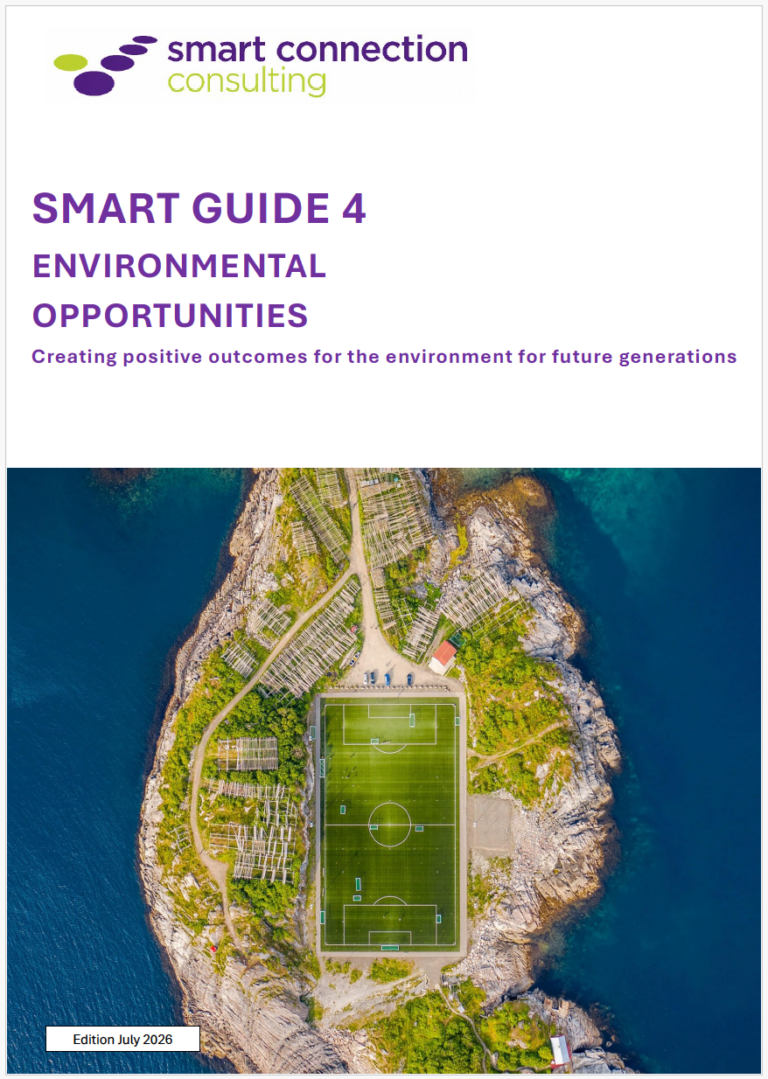
Official Launch of the New Smart Guide to Support Environmental Sustainability in Sports Surfaces
To support these conversations, Smart Connection Consulting will launch the new Smart Guide to Environmental Opportunities for Synthetic Sports Surfaces at NSC26.
This guide has been developed as a practical resource for councils, sports, schools, consultants and project teams navigating the growing environmental expectations surrounding sports surface projects.
Environmental sustainability is now one of the most important considerations in sports surface decision-making. It is also one of the areas where there can be significant confusion, with stakeholders often trying to distinguish between perceived concerns, actual risks, available mitigation strategies and good-practice design.
The purpose of the new Smart Guide is to help bring greater clarity to that discussion.
It explores key issues including:
- climate change and sport
- urban heat island considerations
- biodiversity opportunities for sports fields
- microplastics mitigation
- water use and stormwater management
- tree canopy and whole-of-parkland thinking
- circular economy and end-of-life planning
Importantly, the guide does not treat environmental sustainability as a stand-alone issue. It connects environmental considerations to the full lifecycle of a sports surface, from planning and design through to procurement, management and renewal.
It also reinforces the importance of considering sustainability through a multiple-bottom-line lens: People, Planet, Prosperity and Performance.
A sports surface needs to support community use. It needs to reduce environmental impact where possible. It needs to represent long-term economic value. And it must remain fit for purpose for the sport, site and intensity of use it is designed to accommodate.
This is part of Smart Connection Consulting’s broader commitment to making evidence-based guidance more accessible to the industry. Visit our downloadable resources HERE.
Environmental sustainability is no longer a separate conversation. It needs to be embedded into how every sports surface is planned, designed, procured, managed and renewed.
Designing Better Places, Not Just Better Surfaces
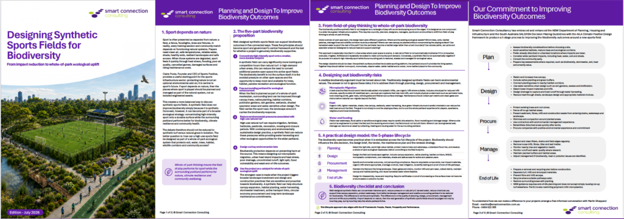
Sustainable design needs to consider the surface system, surrounding landscape, shade and tree canopy, water harvesting, access and movement, biodiversity, community use, climate resilience and long-term asset management.
Good design should not only ask, “what surface should be installed?” It should also ask, “what kind of place are we trying to create, and how can this project deliver broader community and environmental value?”
Sustainable design is not achieved by changing one product or material. It comes from designing the whole place with performance, people, planet and prosperity in mind.
Turning Complex Topics Into Practical Guidance With Smart Insights
In addition to the new Smart Guide, Smart Connection Consulting is also launching an all new Smart Insights collection.
These shorter resources have been developed as practical entry points into the questions councils, sports, schools and project teams are often asked to navigate — from sustainability, planning and procurement through to maintenance, end-of-life, surface types, risk areas and common community concerns.
Not every stakeholder needs the full technical depth of a comprehensive Smart Guide at the beginning of a project. What is often needed first is clear, accessible information that helps frame the issue, address perceptions and identify the right questions to ask next.
The Smart Insights collection is designed to give the sector practical, digestible guidance at the moments where it matters most, while helping build sector and community knowledge.
It also reflects Smart Connection Consulting’s commitment to helping the industry ask better questions earlier and support the broader shift in sports surface projects moving forward.
As NSC26 approaches, there is a real opportunity to bring these conversations into sharper focus and explore what the next phase of sustainable sports surface thinking needs to look like.
The industry is being asked to make more complex decisions, under greater scrutiny and with higher expectations around sustainability, performance, value and long-term responsibility.
That means decision-makers need more than technical information alone. They need clearer frameworks, accessible resources and practical conversations that help them understand the full lifecycle of the assets they are planning, procuring and managing.
That is the purpose behind this next stage of Smart Thinking.
Through NSC26, the new Smart Guide, the Designing Better Places visual and the Smart Insights collection, the aim is to support better questions earlier in the process, where the greatest long-term value can be created.
I look forward to continuing this conversation at NSC26 and exploring The Next Generation of thinking for sustainable sports surfaces with councils, sports, schools, designers, consultants and industry colleagues.
Smart Connection Consulting is proud to support this shift with practical resources that respond to what the industry needs now — clearer guidance, stronger evidence and more informed decision-making across the full lifecycle of sports surface projects.
Visit the National Sports and Physical Activity Convention to view the Program or Register.