SMART THINKING NEWSLETTER – EDITION 5
Environmental sustainability in synthetic sports surface projects cannot be added at the end.
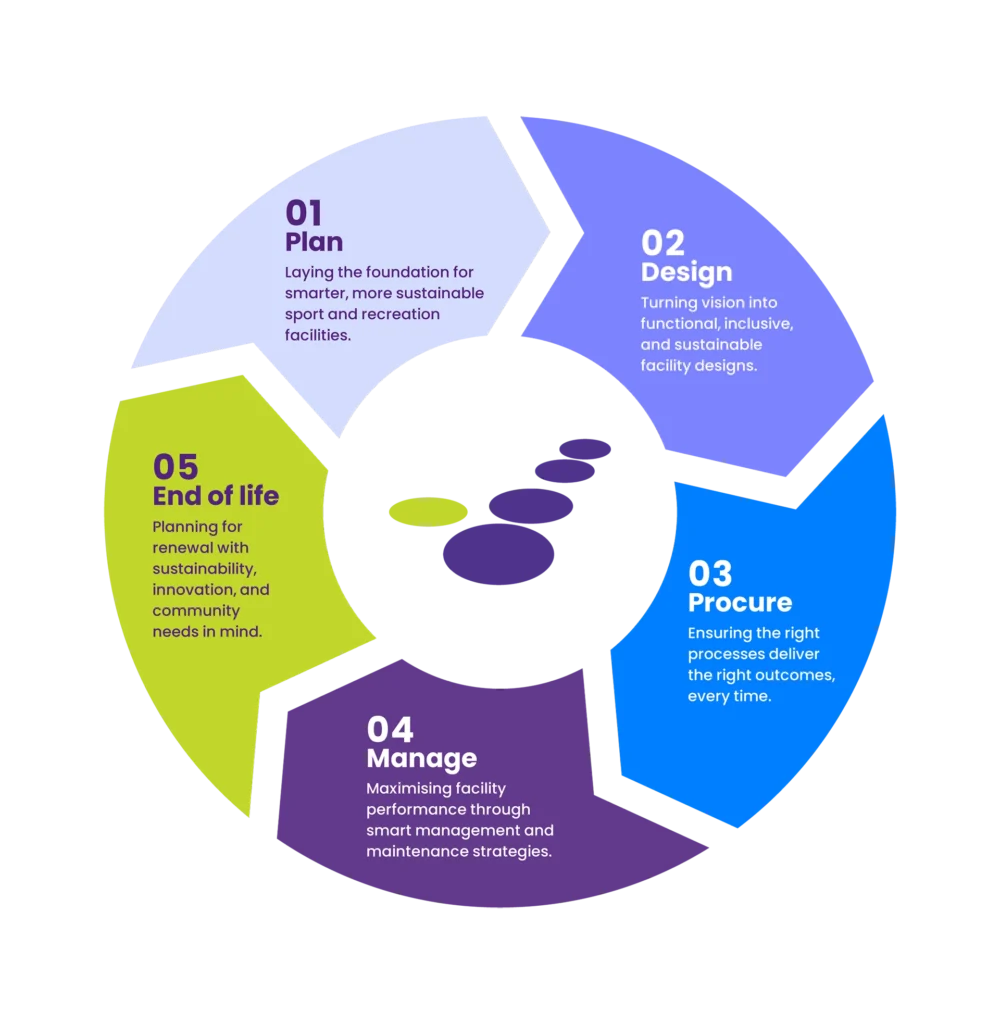
By the time a project reaches design, procurement, installation or renewal, many of the most important environmental decisions have already been made. They are shaped through planning for site selection, surface choice, drainage considerations, material specifications, maintenance assumptions, landscape integration and end-of-life.
That is why the environmental conversation needs to begin much earlier, and to achieve the NSW Department of Planning, Housing and Infrastructure “Guidelines” and especially the additional guide for Review of Environmental Features (REF – Addenda 5.1)
In a recent Sportsfields interview, I reflected on the need for our industry to listen more carefully to the concerns being raised around synthetic surfaces, not to retreat from the conversation, but to embrace community concerns, and improve the planning and design through it. Community concern around their perceptions of microplastics, leaching, circular economy, heat and environmental impact is not something the industry should dismiss. It is something we should use to design better solutions, ask better questions and create more responsible environmental and community outcomes.
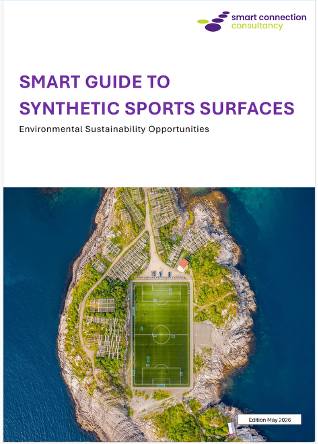
That thinking sits at the heart of Smart Connection Consultancy’s (SCC) new Smart Guide to Synthetic Sports Surfaces: Environmental Sustainability Opportunities.
This guide has been developed to help councils, sporting organisations, designers, consultants and project teams move beyond polarised debate and towards a more practical, evidence-led approach to environmental sustainability.
Introducing the New Environmental Sustainability Smart Guide
The new Smart Guide has been created as a focused resource for one of the most important issues now shaping the sports surface sector: how to plan, design, procure, manage and renew synthetic sports surfaces in a way that reduces environmental impact and supports long-term community value.
It forms part of SCC’s broader Smart Guide series, alongside the main Smart Guide to Synthetic Sports Surfaces (4th Edition) and the soon to be launched Maintenance Smart Guide.
This new Environmental Sustainability guide explores key issues including:
- climate resilience and environmental good practice
- microplastics and infill migration
- leaching, heavy metals and material standards
- urban heat and heat stress
- water harvesting, drainage and flooding
- whole-of-parkland design
- circular economy and end-of-life pathways
- practical sustainability measures across planning, design, procurement, management and renewal
The purpose is not to provide a simplistic answer to a complex issue.
The purpose is to provide a better framework for decision-making.
Synthetic sports surfaces can play an important role in helping communities meet growing demand for sport, recreation and physical activity. But not all systems, specifications or projects are equal. Better environmental outcomes depend on the quality of thinking that sits behind the project from the beginning.
Why the Industry Needs This Resource
The environmental narrative around synthetic sports surfaces has changed.
For many years, much of the community concern focused on health, particularly around crumb rubber infill. More recently, the conversation has shifted towards reducing environmental impact including intentionally added microplastics, water quality around such fields leaching, climate, heat stress, lifecycle impacts and end-of-life pathways.
This shift matters.
As I said in the recent European newspaper, Sportsfields interview, I said that if we embrace the community concern for the environment narrative, we will design and manufacture better outcomes.
For councils and asset owners, this means the conversation should not simply be framed as synthetic versus natural, or product versus product. The more useful question is:
Has this project been planned, designed, procured and managed in a way that reduces environmental risk while supporting community, performance and whole-of-life outcomes?
That is a very different discussion.
It requires us to consider the whole parkland, not just the field of play. It asks whether tree canopy, water harvesting, drainage, landscape design, surface durability, infill selection, maintenance and eventual recycling have all been considered together.
It also requires the industry to be honest about quality.
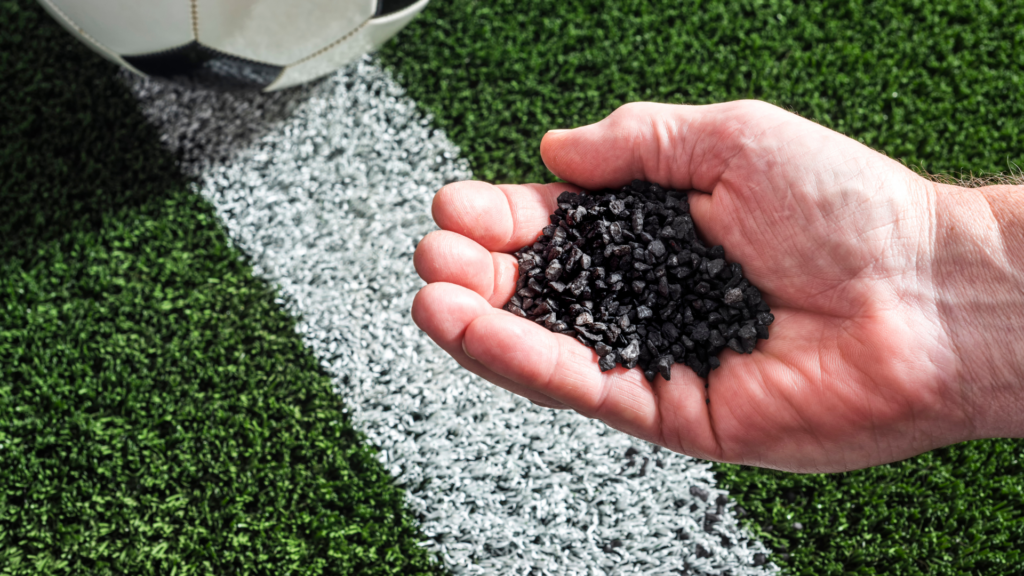
There are contemporary systems and design approaches that can significantly reduce environmental concerns. Dual yarn systems, shockpads, organic infills, closed drainage strategies, higher durability requirements and more considered parkland integration can all make a practical difference when they are embedded early and specified clearly.
The opportunity is to move from defending the surface to improving the project to create positive environmental impact.
Part of a Bigger SCC Resource Pathway
This new Environmental Sustainability Smart Guide is part of a larger SCC resource pathway being developed to support the sports surface industry over the coming months.
As the environmental, technical and community expectations around synthetic sports surfaces continue to evolve, there is a growing need for clear, practical and evidence-led resources that help decision-makers ask better questions earlier in the process.
Over the coming months, SCC will be expanding this resource pathway through a broader three-tier knowledge suite, designed to make complex surface, sustainability and lifecycle considerations more accessible for councils, sporting organisations, consultants and project teams.
The intention is to support the sector at different levels of detail. From comprehensive technical guidance, through to more focused topic-based resources and practical question-led tools that can be used to inform planning, procurement, community conversations and long-term asset decisions.
This reflects SCC’s broader role in the industry: not only advising on individual projects, but helping to build the knowledge base that enables the sector to make better, more informed and more sustainable decisions.
Further resources will be released in the coming months, creating a stronger pathway for the industry to engage with the next generation of thinking around synthetic sports surfaces.
A Balanced Sustainability Lens: People, Planet, Prosperity and Performance
One of the central ideas in the new guide is that sustainability should not be viewed through a single environmental sustainability lens.
For sport and recreation infrastructure, sustainability needs to balance four connected considerations:
People – how the facility supports participation, access, inclusion, health and community use.
Planet – how the project protects or enhances the local environment and reduces avoidable impact.
Prosperity – how capital, maintenance, renewal and whole-of-life costs are responsibly managed.
Performance – how the surface remains safe, durable and fit for purpose over time.
The guide uses this multiple-bottom-line approach to help organisations assess surface decisions more holistically, with measures across community use, environmental impact, whole-of-life cost and fit-for-purpose performance.
This is important because an environmentally responsible project is not created through one decision alone.
A surface may look strong from a performance perspective but create maintenance or end-of-life challenges. Another option may appear environmentally attractive but fail to meet the intensity of use required by the community. A project may meet a sports standard but still miss opportunities to improve the broader parkland.
The strongest projects are those that bring these lenses together early.
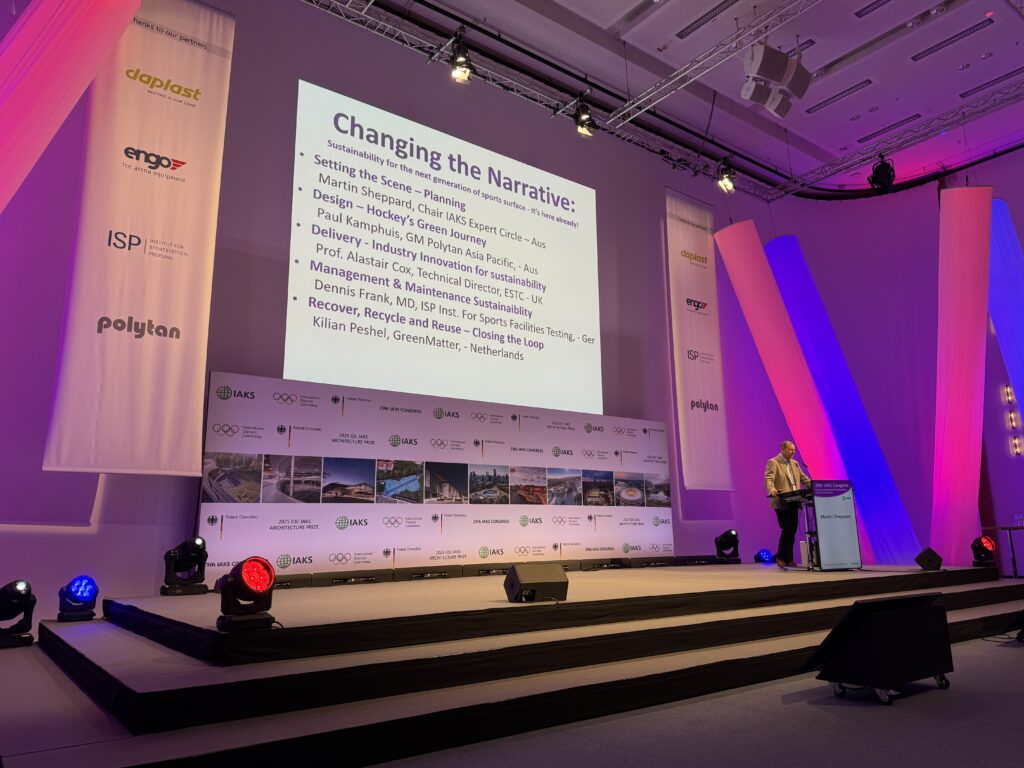
Taking the Thinking to NSC26
This conversation will continue at the National Sports & Physical Activity Convention 2026, where I will be contributing to the Sustainable Sports Surfaces stream.
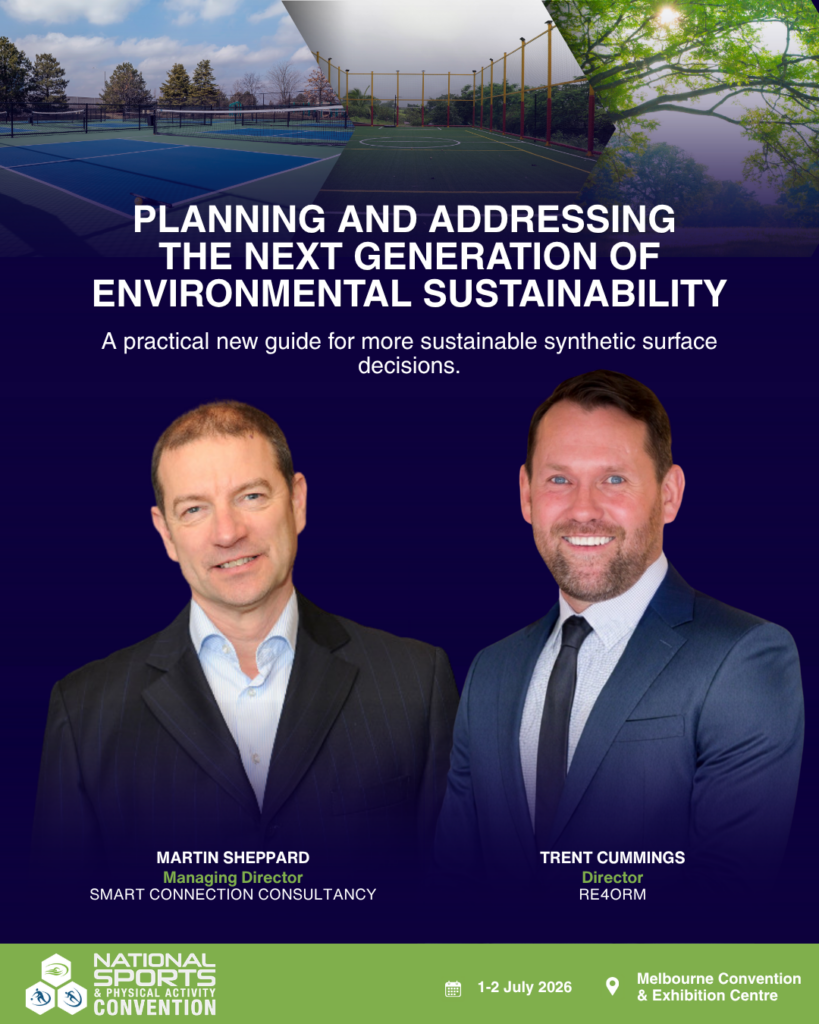
Workshop 4.1: Planning and Addressing the Next Generation of Environmental Sustainability
Wednesday 1 July 2026 | 1:35pm – 2:10pm
In partnership with RE4ORM
My presentation, Understanding How to Impact the Environmental Narrative with Synthetic Surfaces in a Positive Manner, will build directly on the themes explored in the new Smart Guide.
The focus will be on how the industry can respond constructively to environmental concern, and how better planning, design, procurement, management and end-of-life thinking can help shift the narrative from risk and resistance to practical improvement.
Trent Cummings from RE4ORM will also bring an important perspective to this workshop, particularly around sustainability and end-of-life thinking beginning at the planning stage.
For delegates involved in synthetic surfaces, community sport infrastructure, open space planning, procurement or asset renewal, this session will provide a timely opportunity to engage with the next generation of environmental sustainability thinking.
Continuing the Conversation Through Sportsfields
The recent Sportsfields interview provided an opportunity to explore many of these issues in more depth.
In that conversation, I spoke about the need for a different mindset in how we approach synthetic surface projects. We need to stop thinking only about the performance field and start thinking more seriously about landscape integration, construction integration and the environmental impact of the whole parkland.
That is the direction the industry now needs to move.
As population growth, urban density and demand for active spaces continue to increase, synthetic surfaces will remain part of the infrastructure solution. The challenge is to ensure they are planned and delivered to a higher standard, with stronger environmental thinking, better specifications, longer-term durability and clearer end-of-life pathways.
The Sportsfields interview and the new Smart Guide are both part of SCC’s commitment to helping the industry have that conversation with more confidence.
Coming Soon: SCC Sports Surfaces Workshops | Sydney, December 2026
To support the release of the new Smart Guide resource suite, SCC will be hosting a series of Sydney workshops in December.
These sessions will be designed for councils, sporting organisations, consultants and industry partners who want to apply the latest thinking to real project scenarios.
The workshops will explore practical approaches to:
- environmental sustainability
- surface planning and project readiness
- maintenance and lifecycle performance
- procurement and specification quality
- microplastics, climate, drainage and end-of-life planning
- better decision-making across the full lifecycle
Dates and registration details will be released soon! Sign up to our mailing list HERE to receive event updates from our team.
A Smarter Environmental Pathway Forward
The environmental conversation around synthetic sports surfaces will continue to grow, and that is a positive thing if it leads to better outcomes.
The responsibility for our industry is not to avoid scrutiny. It is to respond to it with better evidence, better design, stronger standards and more transparent decision-making.
As custodians of community sport infrastructure, we need to plan now for the generations who will use these spaces in the future.
That means asking better questions earlier.
It means considering the whole parkland, not just the field of play.
It means designing to address the cause of environmental impact, not just treating the effect.
And it means ensuring that every surface decision is considered through the lenses of people, planet, prosperity and performance.
The new Smart Guide to Synthetic Sports Surfaces: Environmental Sustainability Opportunities has been developed to support that shift.
To request a copy of the guide or discuss an upcoming project, feel free to reach out to me directly or download it from our websites resource centre HERE.
Smart Thinking helps leaders make smarter, more sustainable facility decisions. Subscribe for future insights or explore the latest SCC resources at smartconnection.net.au.