SMART THINKING NEWSLETTER – EDITION 2
Where Performance Meets Sustainability
As demands on sport facilities continue to grow, surface planning and design has become more complex, more scrutinised, and more important than ever. Communities expect high-performance playing environments that enhance safety and experience, while councils face increasing pressure to deliver facilities that are environmentally responsible, financially sustainable, and adaptable to future needs.
The belief that performance and sustainability sit on opposite ends of a spectrum is outdated. Today, the industry’s most innovative systems enhance both at the same time – and this is where the next generation of thinking is headed!
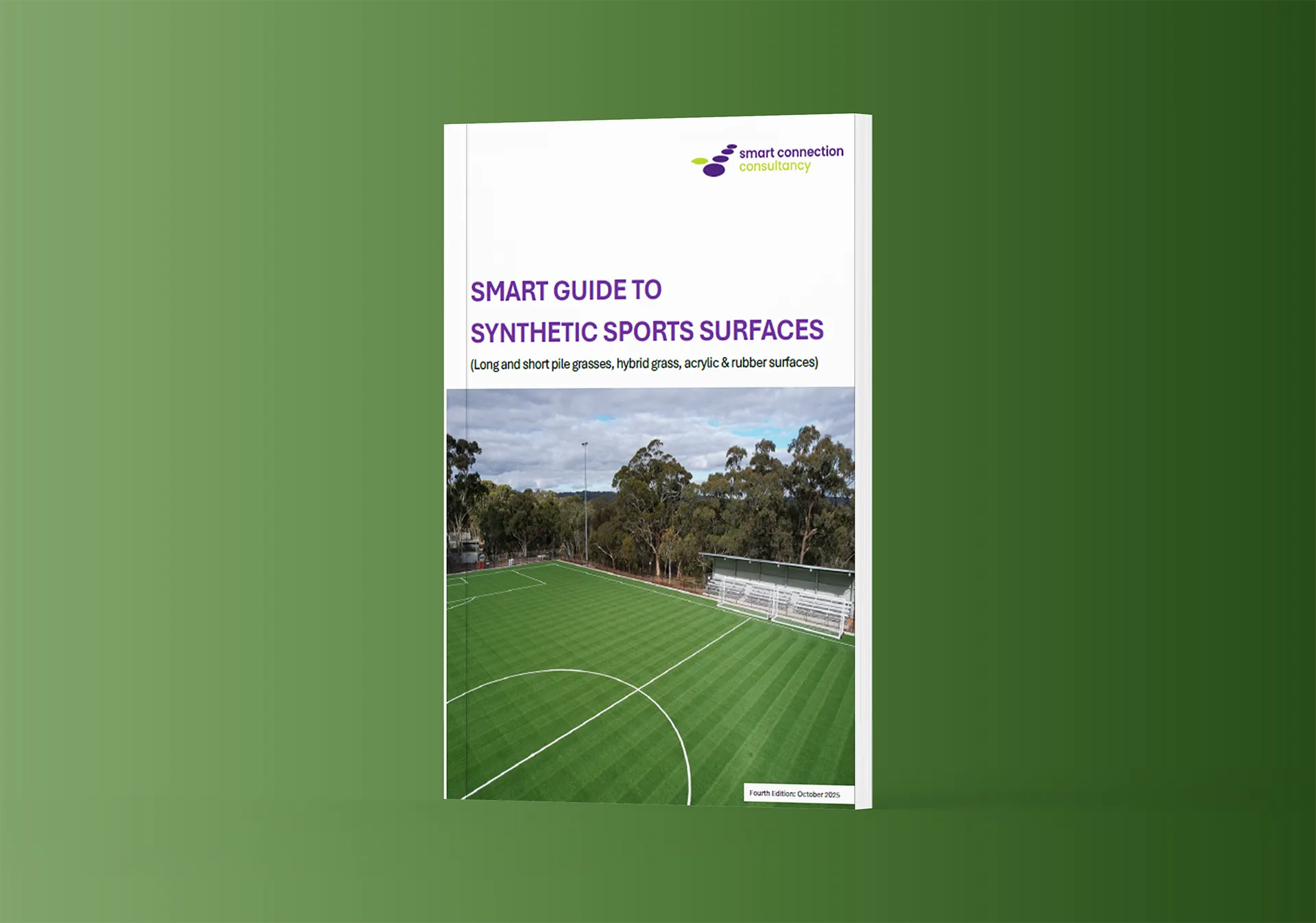
The 4th Edition Smart Guide and the IAKS Future Trends whitepaper both reinforce the same conclusion: the smartest designs are those that consider long-term value across the entire lifecycle – not just the first day of use.
The Shift Toward Smarter Design Decisions
Historically, sports surface decisions were driven by product brochures, supplier recommendations, or the immediate performance needs of a single sport. But the sector has evolved. Councils are now required to consider:
- Long-term community needs and aspirations
- Site selection aligned with demand and whole of municipality positioning
- Environmentally responsible design and material selection
- Lifecycle cost and durability
- Climate resilience and heat mitigation
- Accessibility and multi-use
- Circular economy and end-of-life pathways
- Whole-of-life value instead of short-term outcomes
This change reflects a deeper understanding: surfacing designs and systems are not just a technical decision – they’re a community investment decision.
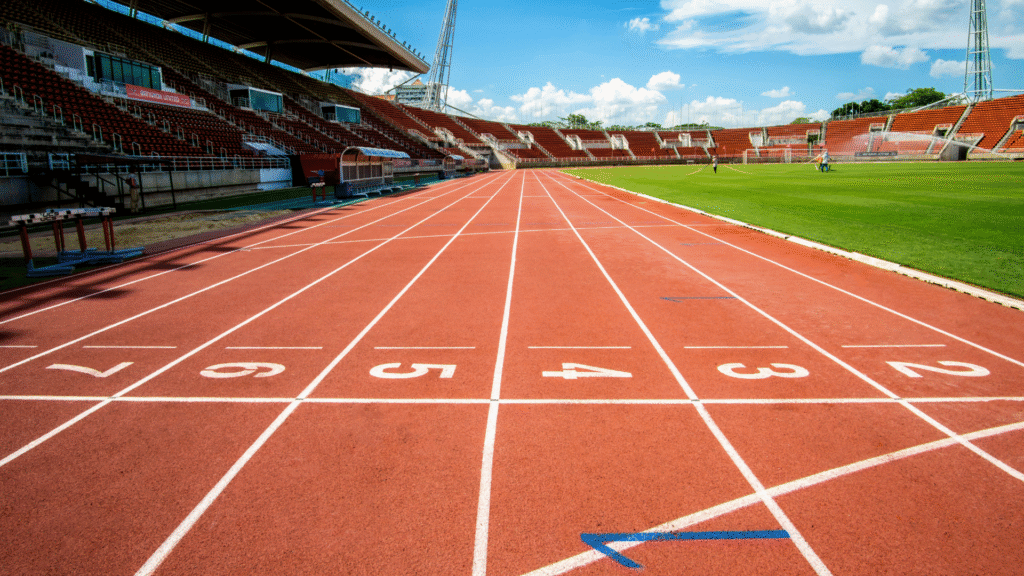
When a council installs turf, acrylic, hybrid grass or rubber athletics systems, they are influencing participation opportunities, safety, environmental footprint and maintenance resourcing for the next 30 years.
Insights from the Smart Guide: Designing for the Four Ps
The Smart Guide reframes design through the lens of the 4 Ps – People, Planet, Prosperity, and Performance.
This simple, powerful model helps councils navigate complex design trade-offs by asking:
- Does this surface serve people well?
- How does this system impact the environment?
- Is the investment sustainable across its lifespan?
- Does the surface meet performance expectations over time?
When applied during design, these four pillars deliver clarity and reduce the risk of future regret.
People
Surfaces should enhance safety, access, inclusion and community use. Newer systems are designed for broader participation and less injury risk.
Planet
Designing for environmental alignment is no longer optional. Key considerations include:
- organic or environmentally neutral infills
- reduced water consumption
- recycled shockpads
- materials designed for reuse
- low heat load systems
- shading and tree canopy integration
Prosperity
Whole-of-life costs, not just installation costs, govern financial success.
High-quality engineering base, and shockpads, for example, may seem more expensive upfront but deliver 2 – 3 reuse cycles, saving hundreds of thousands long-term.
Performance
Surfaces must deliver consistent shock absorption, ball-surface interaction, traction, and durability over time – not just in the first season.
When design decisions consider all four pillars, the result is a smarter facility with greater long-term community value.

Key Sustainability & Performance Innovations Shaping Today’s Designs
The IAKS Future Trends for Outdoor Sports Surfaces paper highlights several emerging innovations that councils should be aware of. These technologies influence both performance and environmental outcomes and will increasingly shape procurement decisions.
1. Organic and Environmental Infills
Demand for non-rubber, low-heat, low-toxicity infills continues to rise. Organic options:
- support more comfortable surface temperatures
- offer reduced environmental risk
- integrate well with modern shockpads
- improve athlete experience
2. Lower Water and Waterless Hockey Systems
A major shift for hockey, these systems:
- reduce and eliminate large water consumption
- optimise ball glide and stick interaction
- perform consistently in hot climates
- reduce operational costs
3. Recycled or Renewable Shockpads
The shockpad is the “engine room” of synthetic surfaces. Recycled polymer systems:
- have 20–30 year life spans
- support multiple reuse cycles
- reduce landfill impact
- maintain performance consistency
4. Hybrid Grass Technologies
Hybrid systems blend natural and reinforced fibres, enabling:
- better wear distribution
- stronger root structure
- extended seasonal use
- resilience to climate extremes
5. Bio-Based & Low-Impact Materials
From binders to turf fibres, more manufacturers are embracing bio-based formulations that reduce chemical load and increase recyclability.
Each of these innovations demonstrates the same truth: performance and sustainability can reinforce one another when grounded in lifecycle thinking.
How SCC’s Lifecycle Approach Strengthens Design Decisions
Many design mistakes occur not because of the wrong product, but because of the wrong assumptions.
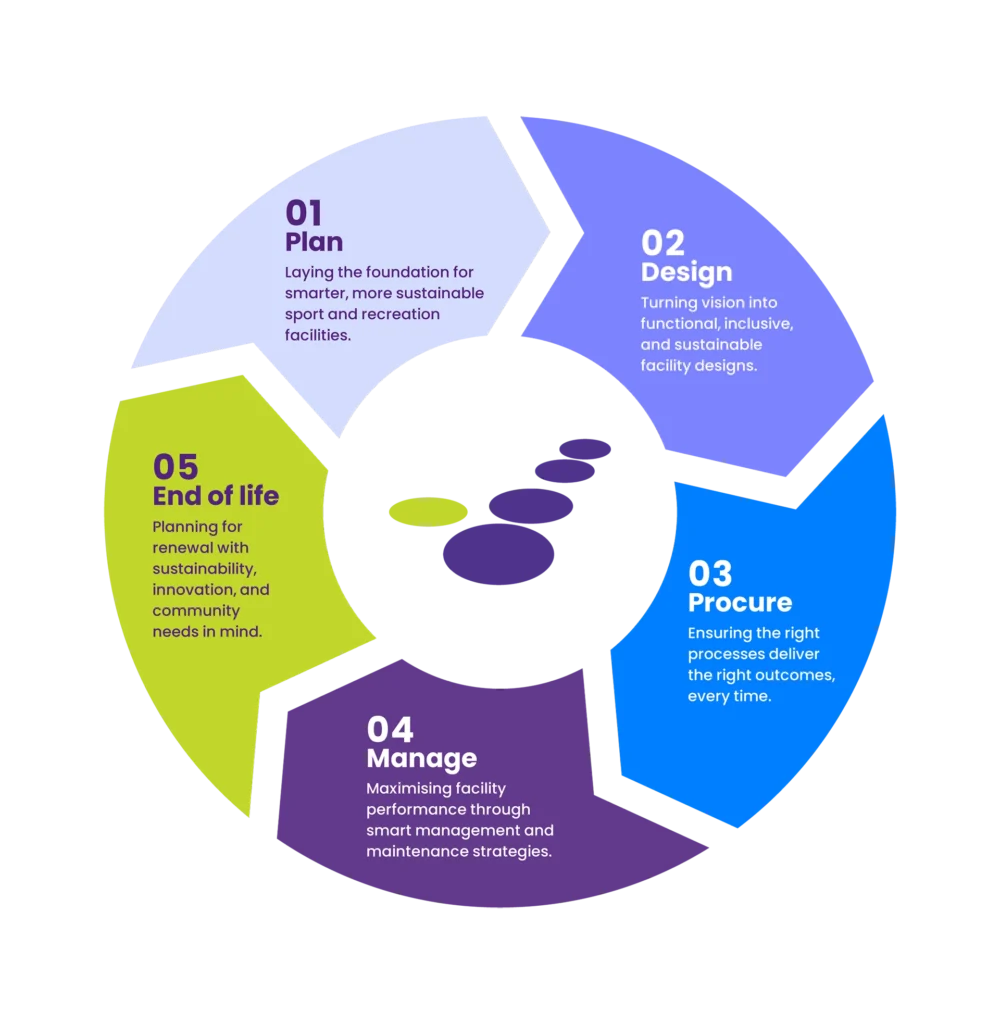
SCC’s 5-Phase Lifecycle Model integrates design decisions into a broader system:
- Planning – identify community needs, participation trends, accessibility requirements.
- Designing – select systems that balance safety, performance, climate and sustainability.
- Procurement – ensure tender documents specify whole-of-life criteria.
- Management – implement maintenance aligned with expected lifespan.
- End-of-Life – plan reuse, recycling and environmentally responsible renewal.
By viewing design through this lifecycle lens, councils minimise risk, increase value, and ensure facilities remain fit for purpose for their entire lifespan.
Practical Actions for Councils Designing a New Facility
To ensure new sports surfaces achieve long-term performance and sustainability, councils can:
1. Adopt whole-of-life thinking early
Design choices should consider 30 year outcomes, not just the term of the first carpet replacement .
2. Use the Smart Guide as a benchmarking tool
Check organisational plans against global standards and evidence-based recommendations.
3. Consider environmental and climate challenges explicitly
Heat loads, microplastics, drainage, shading, and end-of-life must be part of design – not afterthoughts.
4. Choose adaptable, multi-use systems
Allow fields and courts to support evolving participation trends.
5. Specify sustainability and performance criteria in procurement, not after
The earlier sustainability is embedded, the better the outcome.